
Understanding Hypertrophic Scars: Causes and Treatments
- Skin & Scar Care Clinic
- Nov 11, 2025
- 5 min read
Updated: Dec 2, 2025
What is a Hypertrophic Scar?
A hypertrophic scar is an overgrowth of fibrous tissue that remains within the boundary of the original wound. Unlike keloids, which extend beyond the wound margins, hypertrophic scars are raised, may be red or darker than the surrounding skin, and often improve over time. However, many patients seek treatment for cosmetic, symptomatic, or functional reasons.
Causes & Risk Factors
Hypertrophic scarring is linked to various factors that alter normal wound healing and collagen balance:
Injury Type: Burns, deep lacerations, and surgical incisions are common triggers.
Tension on the Wound: High-tension closures (e.g., across joints) increase the risk.
Delayed Healing or Infection: Prolonged inflammation encourages excess collagen.
Genetic and Individual Factors: Some individuals are more prone to raised scarring.
Anatomic Site & Skin Type: Areas like the chest and shoulders, as well as tight skin, are at higher risk. Darker skin types may show more pronounced pigmentation and hypertrophy.
Age & Systemic Factors: Younger patients often form more robust scars, while some systemic illnesses and medications can affect healing.
Initial (Immediate) Management — What to Do in the First Weeks
Early, proactive care can reduce the chance of problematic hypertrophic scarring:
Wound Care & Infection Control: Keep the wound clean, follow surgical aftercare, and treat any infection promptly. (Infection → prolonged inflammation → scar overgrowth.)
Minimise Tension on the Closure: Use appropriate suturing techniques, immobilisation, or support garments if recommended.
Sun Protection: UV exposure can worsen scar appearance. Apply SPF 30+ and cover the scar for at least 12 months.
Silicone Therapy & Pressure Therapy: Silicone sheets/gels and pressure garments are low-risk first-line measures for early scar control and symptom relief. Evidence supports silicone as helpful for flattening and softening scars.
Early Specialist Review: If a wound shows early signs of abnormal scarring (excessive redness, raised tissue, itching), refer to a specialist scar clinic for assessment and earlier intervention options. Early action provides more options and often leads to better outcomes.
Full Treatment Options (Overview)
Management is often multimodal and personalised at a specialist scar clinic:
Topical Therapies: Silicone gels, steroid creams (limited effect), and emollients.
Intralesional Corticosteroid Injections: First-line for many hypertrophic scars — these reduce inflammation and flatten raised tissue.
Pressure Therapy / Compression Garments: Especially useful for burn scars and large surface areas.
Cryotherapy / Cryosurgery: Freezing treatments can reduce scar bulk but may risk pigment changes.
Surgical Revision: Considered for functionally impairing scars; usually combined with adjuvant therapy (steroids, radiotherapy, or laser) to reduce recurrence.
Radiotherapy: Reserved for refractory keloids in specialist hands.
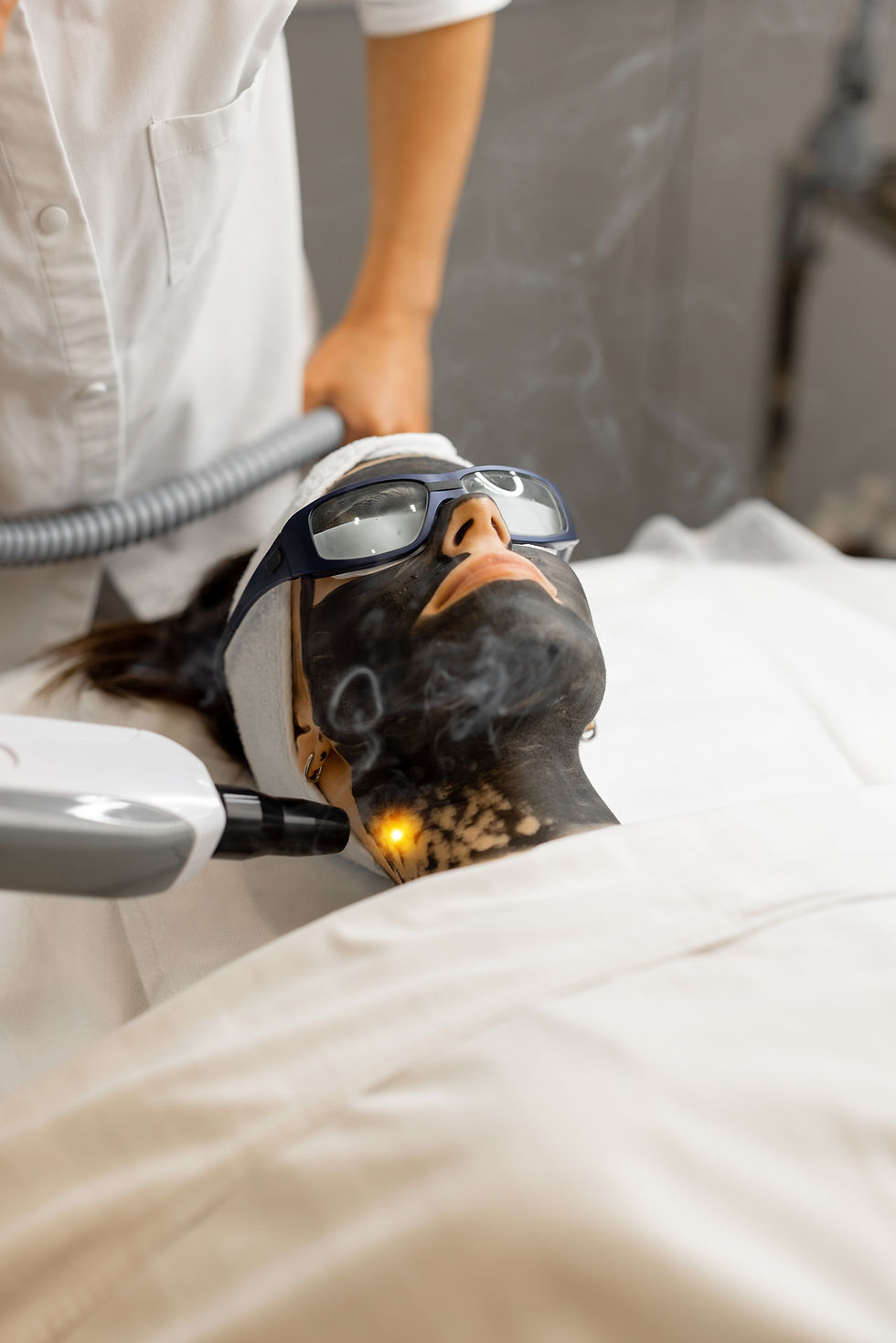
Lasers: Two main laser strategies have the strongest clinical application for hypertrophic scars:
- Vascular Lasers (PDL / Dye Lasers / 585–595 nm): These target microvasculature to reduce redness and vascularity, softening scar tissue.
- Ablative Fractional Lasers (Fractional CO₂): These induce controlled micro-injury to remodel collagen, soften and flatten raised scars, and improve texture.
Combination Therapies: Laser plus intralesional steroid, laser-assisted drug delivery, or botulinum toxin + laser have shown promising synergistic results in studies.
Focus: Early Laser Treatment — Why Timing Matters
Traditional thinking often reserved laser treatment for mature scars. Recent research increasingly supports early intervention (weeks to months after wound closure) to modulate the scar before full maturation:
Rationale: Early vascular activity (redness, angiogenesis) and immature collagen architecture present a therapeutic window where lasers can reduce hypervascularity, inflammation, and aberrant collagen deposition.
Clinical Evidence: Multiple studies and emerging reviews report improved scar appearance, pliability, and vascularity when pulsed-dye laser (PDL) or fractional CO₂ are used early after surgery or trauma. For instance, early postoperative fractional CO₂ laser in thyroidectomy scars and other surgical wounds showed safer, faster cosmetic improvement compared to no laser. Animal and clinical studies demonstrate favourable collagen remodelling and reduced TGF-β signaling with early laser use.
Important Balanced Point: Systematic reviews (including Cochrane-style analyses) find heterogeneity across trials and note that overall evidence quality is variable. Some reviews conclude that evidence is still low-certainty and call for larger, standardized RCTs. That said, targeted, specialist-led protocols combining PDL and fractional CO₂ show consistent, clinically meaningful improvements in many series. In short, the evidence base is promising and growing, but optimal protocols (timing, energy, sequencing) are still being refined.
Vascular Lasers (PDL) — What They Do and When to Use Them
Mechanism: PDL targets oxyhemoglobin in microvessels, leading to selective photothermolysis that reduces redness and vascularity, calms inflammation, and can indirectly reduce scar raisedness.
Best For: Early red, vascular hypertrophic scars and symptoms such as itching and pain. Also useful as an adjunct to steroid injections or ablative therapy to reduce recurrence.
Evidence Snapshot: Several randomized and controlled studies across decades have shown that PDL reduces erythema and may improve scar pliability. Clinical trials and systematic reviews support its role, particularly for early and symptomatic scars, though study designs vary.
Fractional CO₂ Laser — How It Remodels Scars
Mechanism: Fractional CO₂ ablates microcolumns of tissue to induce controlled thermal injury, stimulating neocollagenesis and remodelling that flattens and softens raised scars while improving texture.
Best For: Established hypertrophic scars with thickness, texture irregularities, or contracture. Increasingly used early post-op in specialised protocols to prevent severe hypertrophy.
Evidence Snapshot: Clinical trials, animal models, and recent systematic reviews/meta-analyses demonstrate significant improvements in the Vancouver Scar Scale and patient satisfaction with fractional CO₂, particularly when started early or used in combination with other modalities. The safety profile is acceptable in experienced hands, but parameter selection is critical to avoid pigmentary complications—especially in darker skin types.
Combination Approaches — Better Than Monotherapy?
Many specialist scar clinics employ combinations that leverage complementary mechanisms:
PDL + Fractional CO₂: PDL reduces vascularity and inflammation, while fractional CO₂ remodelling addresses bulk and texture. Sequential use often outperforms single-modality treatment in case series.
Laser + Intralesional Steroid or 5-FU: Laser can increase drug uptake (laser-assisted drug delivery) and reduce required steroid doses.
Botulinum Toxin + Laser: Emerging evidence suggests BTX-A before ablative laser can reduce tension and improve outcomes in early hypertrophic scars.

Practical Considerations & Safety
Skin Type Matters: Ablative lasers (CO₂) have a higher pigmentary risk in Fitzpatrick IV–VI. Practitioners should tailor settings and consider test areas or non-ablative options.
Timing & Parameters: ‘Early’ varies across studies (from 2–6 weeks to 3 months post-op). Specialist clinics set protocols based on wound healing, infection status, and scar characteristics. Do not treat actively infected or unhealed wounds.
Number of Sessions: Multiple sessions (often 2–6) at intervals (4–8 weeks) are commonly required.
Side Effects: Redness, swelling, transient hypo/hyperpigmentation, and rare scarring or burns can occur if improperly performed. Use only in experienced hands at a specialist scar clinic.
What to Expect at a Specialist Skin and Scar Clinic
At a specialist scar clinic, you’ll receive:
A thorough scar assessment (Vancouver Scar Scale, photos, functional assessment).
A tailored plan: conservative measures, silicone/pressure, injections, laser scheduling, and combination therapy where appropriate.
A discussion of realistic outcomes and risks, especially important for early laser strategies.
Follow-up and objective outcome tracking (photographs, scales) to adjust treatment.
Realistic Outcomes & Patient Takeaways
Early laser intervention, particularly with PDL, DVL, and fractional CO₂ in specialist protocols, has demonstrated improved redness, pliability, and scar texture in many controlled and preclinical studies. This offers a meaningful option for surgical scar and traumatic scars when started early by experienced clinicians.
Take-Home Practical Checklist (for Clinicians & Patients)
Monitor surgical wounds closely for early signs of hypertrophy.
Start basic measures: silicone, compression (if indicated), and sun protection.
Refer early to a specialist scar clinic if the scar shows rapid hypertrophy, symptomatic issues, or functional limitation.
Discuss early laser options (PDL, fractional CO₂) as part of a multimodal plan. The benefits are increasingly supported by clinical studies but must be balanced with patient skin type and risk tolerance.
---wix---


Comments